The Emergence of Skill-Based Elements Blending with Traditional Chance-Driven Formats Across Portable Entertainment Platforms
Drew Schmid · Aug 2, 2026
The Emergence of Skill-Based Elements Blending with Traditional Chance-Driven Formats Across Portable Entertainment Platforms
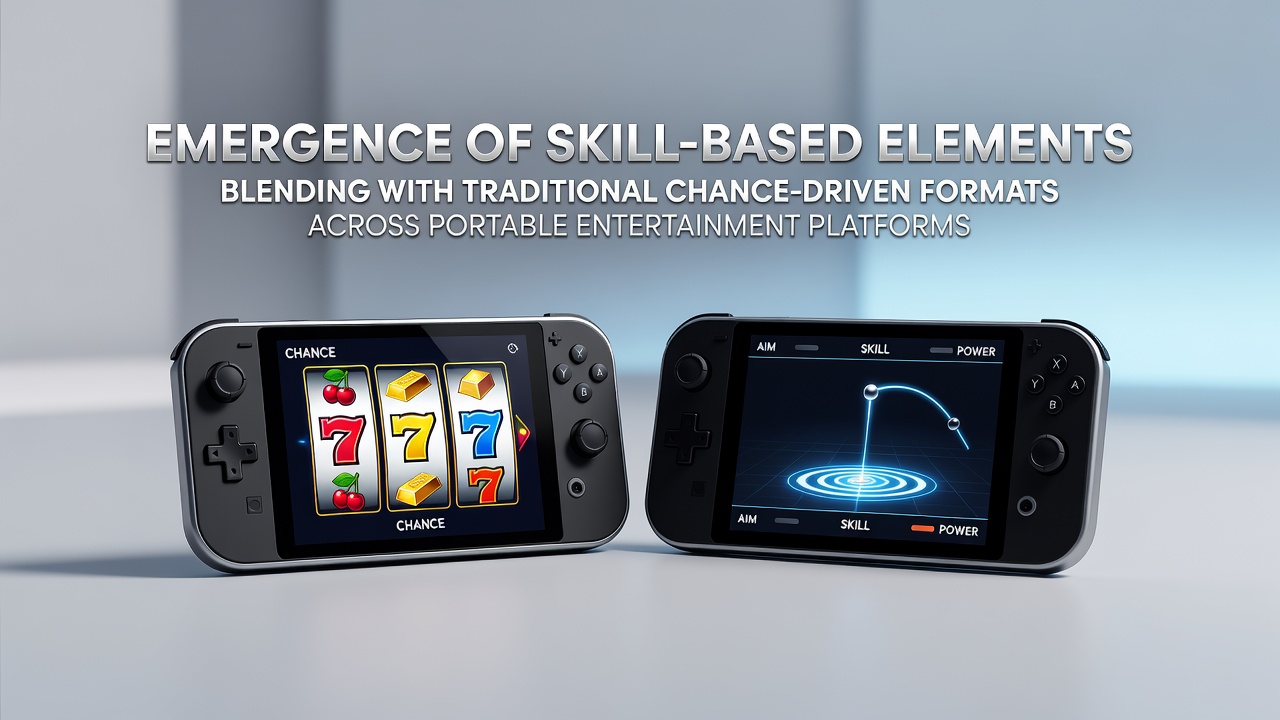
Portable entertainment platforms have witnessed steady integration of skill-based mechanics into formats once dominated by random outcomes, with developers layering player decisions, timing challenges, and strategic choices onto established chance structures in mobile applications. Data from industry tracking services shows that hybrid titles accounted for roughly 18 percent of new mobile game releases in the first half of 2026, a figure that rose from 11 percent two years earlier. Regulators in multiple jurisdictions now track these titles separately because their outcomes depend partly on player input rather than pure probability models.
Traditional Chance Foundations in Mobile Formats
Chance-driven mechanics remain central to many portable games, particularly those modeled after slot machines or random prize draws, yet developers began adding measurable skill layers around 2023 to differentiate offerings in crowded app stores. Players encounter familiar reel spins or card shuffles, but they also face brief interactive segments such as aiming projectiles or sequencing moves that alter multipliers or bonus triggers. Nevada's gaming control board documented over 240 mobile titles incorporating these hybrids by August 2026, up from 95 in 2024, reflecting broader acceptance among operators who must still certify that random number generators govern the core payout percentages.
Skill Integration Patterns Across Devices
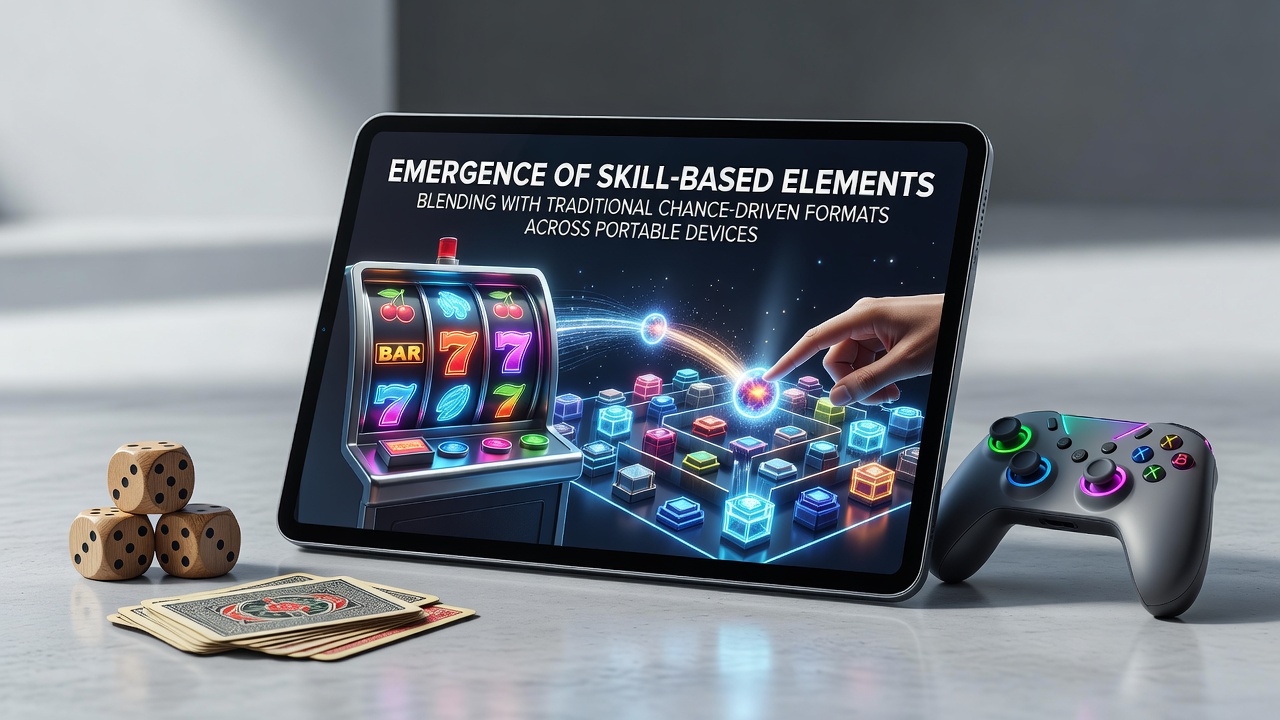
Skill elements typically appear in short bursts that interrupt or modify random sequences, allowing developers to maintain regulatory compliance while introducing repeat engagement loops. One common approach places a timing window after a random symbol lands, requiring the user to tap at a precise moment to lock an enhanced payout tier. Another method lets players select paths on a branching map that random prize pools populate, so navigation skill influences which pool activates without changing the underlying odds. Research from the University of Nevada's gaming analytics lab indicates these additions extend average session times by 14 to 22 percent compared with pure chance equivalents, though completion rates for skill segments vary widely by age group and device type.
Regional Regulatory Responses Through Mid-2026
Authorities in different markets have adopted distinct approaches to classification and oversight. The Malta Gaming Authority updated its remote gaming guidelines in March 2026 to require separate testing protocols for any title where player skill demonstrably affects prize distribution frequency. Australian state regulators followed with similar rules in June, mandating that operators disclose the exact weighting between random and skill components in player-facing terms. These frameworks emerged after several operators reported difficulty categorizing games that blend both elements, prompting calls for standardized measurement tools across portable platforms.
Market reports compiled by the American Gaming Association reveal that mobile hybrid titles generated an estimated $1.9 billion in gross gaming revenue during the second quarter of 2026, concentrated primarily in jurisdictions that permit skill-influenced prize structures. Operators note that these games attract demographics previously less engaged with chance-only formats, particularly users aged 25 to 34 who report higher satisfaction when their inputs visibly shape results.
Technical Implementation Challenges
Developers face constraints when embedding skill mechanics because portable hardware varies in processing speed and touch-screen responsiveness. Synchronization issues between client-side skill detection and server-side random number generation have led several studios to adopt hybrid architectures where skill calculations occur locally while outcome verification remains centralized. A 2026 white paper from the European Gaming and Betting Association outlined latency thresholds below which skill elements remain fair, recommending maximum 80-millisecond response windows for mobile networks to prevent hardware advantages from skewing results.
Testing protocols now include simulated network conditions and device fragmentation checks, with certification labs documenting failure rates around 12 percent for initial submissions that involve complex skill overlays. Those figures drop sharply after iterative adjustments to input tolerance ranges and visual feedback timing.
Player Behavior Data and Platform Trends
Analytics platforms tracking user interactions report that skill-hybrid games produce distinct retention curves compared with pure chance titles. Completion of skill segments correlates with increased likelihood of subsequent deposits in monetized environments, though this pattern holds only when success rates remain between 35 and 65 percent. Lower or higher rates appear to reduce engagement according to aggregated telemetry shared by multiple aggregators in mid-2026.
Portable platforms continue expanding these hybrids into live dealer environments, where players perform quick skill tasks between random card or wheel outcomes. Early deployments in New Jersey and Pennsylvania show measurable upticks in table game participation when such features activate during slower betting periods.
Conclusion
By August 2026 the blending of skill-based elements with chance-driven formats had moved from experimental status to established practice across portable entertainment platforms. Regulatory bodies, developers, and operators each refined their approaches to measurement, certification, and disclosure, creating a clearer framework for continued growth. The pattern shows no immediate signs of reversal, with new titles incorporating increasingly refined skill layers while preserving the random cores that define many traditional formats.