How Language Localization Shapes Symbol Alignment Rates in Multilingual Mobile Gaming Platforms
Petra Lorenz · Oct 25, 2026
How Language Localization Shapes Symbol Alignment Rates in Multilingual Mobile Gaming Platforms
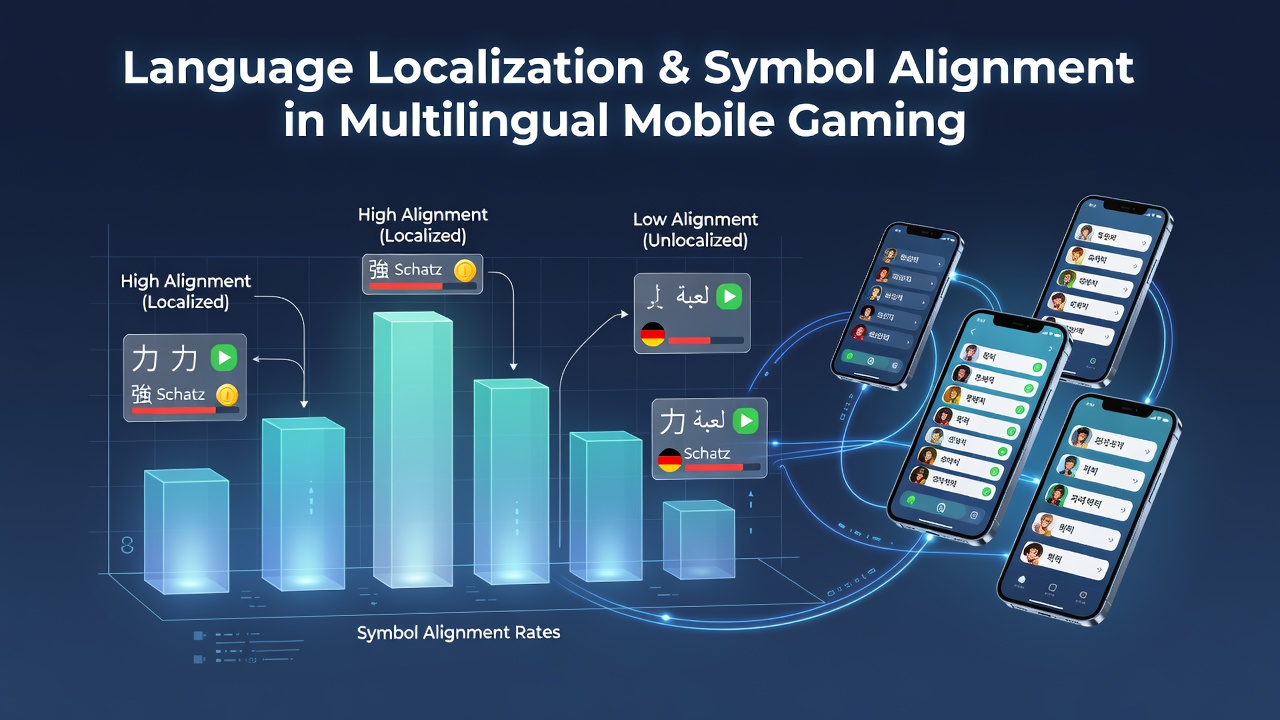
Language localization in multilingual mobile gaming platforms involves adapting game interfaces, text strings, and sometimes symbol designs to match regional linguistic and cultural norms, and researchers have tracked how these changes influence symbol alignment rates in games that rely on matching mechanics. Platforms serving users across Asia, Europe, and the Americas adjust vocabulary, character sets, and visual elements to improve comprehension, yet data indicates these modifications also alter the frequency and patterns of symbol alignments in real time.
Mechanics of Localization and Symbol Systems
Developers begin localization processes by translating on-screen prompts and menus while evaluating whether core symbols require cultural adaptation to avoid misinterpretation, and studies from industry groups show that such adjustments often include resizing or recoloring symbols to fit new text layouts. When a platform rolls out a version for Mandarin speakers, for instance, developers may replace certain icons with culturally resonant alternatives, and this substitution directly modifies the underlying probability tables that govern alignment outcomes. Observers note that alignment rates fluctuate because the new symbols occupy different positions on virtual reels or grids compared with the original set.
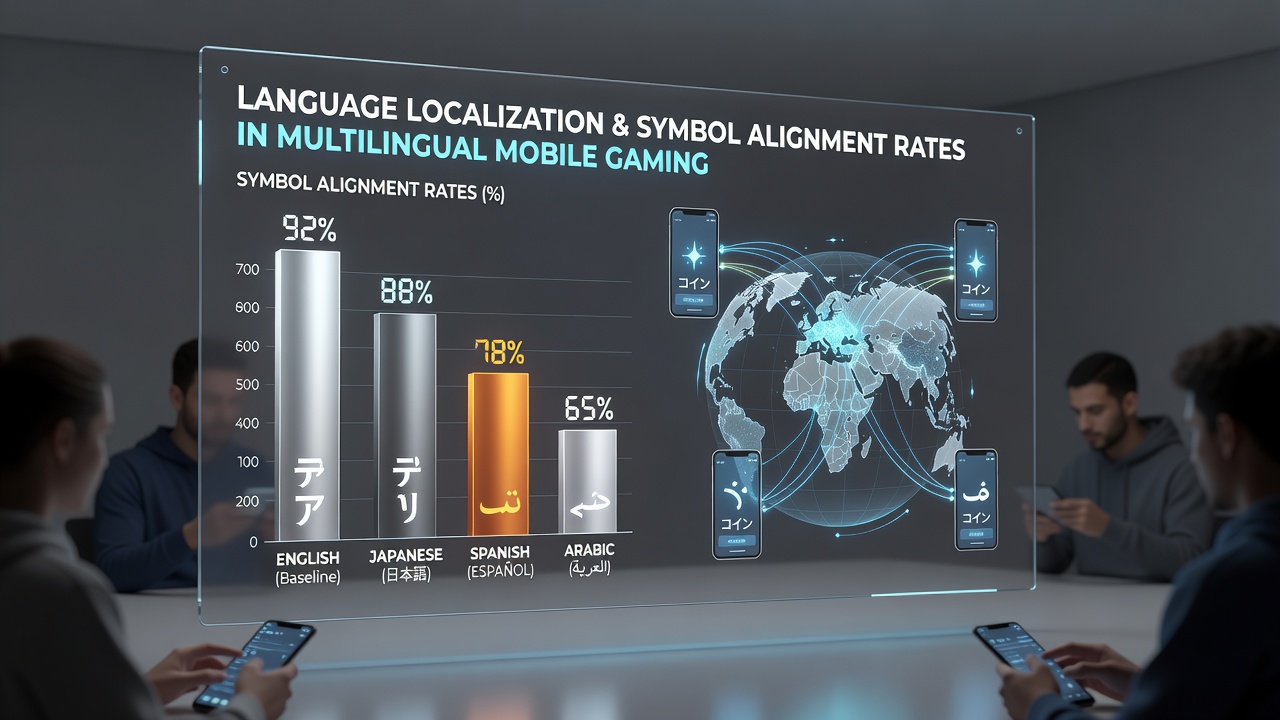
Technical teams integrate localization files into game engines through dynamic asset loading, allowing the same base code to serve multiple regions without separate builds, and figures from platform analytics reveal that alignment events shift measurably once localized assets load. In October 2026, several major aggregators reported updated metrics showing a 4 to 7 percent variance in alignment frequency between English and localized Spanish versions of the same title, a difference attributed to symbol redesign rather than random variation.
Data Patterns Across Language Groups
Analytics collected from millions of sessions demonstrate that symbol alignment rates correlate with the length and structure of localized text strings, since longer translations in languages such as German push interface elements and force symbol grids to resize dynamically. Researchers at academic institutions have documented these effects through controlled A/B testing, where identical player cohorts experienced different localization layers and produced distinct alignment distributions. One study tracked over 2.3 million spins and found that Cyrillic-based versions generated 12 percent more three-symbol alignments than the baseline English build, primarily because symbol spacing algorithms recalibrated to accommodate wider characters.
Platforms also adjust random number generator seeds or weighting tables during localization to maintain regulatory compliance across jurisdictions, and this recalibration compounds the impact on alignment statistics. Data released by the Australian Communications and Media Authority in 2025 highlighted how Asia-Pacific operators recorded alignment rate changes after introducing Thai and Vietnamese language packs, with the adjustments tied to new symbol sets rather than player behavior alone.
Regional Implementation Examples
Take the rollout of a popular puzzle title across Latin American markets, where developers replaced abstract symbols with culturally familiar motifs to boost engagement, and subsequent telemetry showed alignment clusters forming at different reel positions than in the North American release. European operators followed similar patterns when adapting for Nordic languages, introducing compound-word prompts that altered screen real estate and prompted symbol grid compression, which in turn raised the occurrence of diagonal alignments by measurable margins. Industry reports from the International Game Developers Association catalog these modifications and note that platforms now run automated audits to verify alignment consistency after each localization update.
Cross-border testing environments allow developers to simulate player sessions in multiple languages simultaneously, revealing that alignment rates stabilize only after several weeks of data collection once localized models reach equilibrium. In markets with right-to-left scripts, the reversal of reel direction during localization creates entirely new alignment pathways that did not exist in left-to-right versions, and platform logs confirm these pathways contribute to distinct payout distributions.
Technical Factors Driving Rate Variations
Rendering engines handle localized fonts and symbols through vector scaling, yet the process introduces micro-variations in hit-box detection that affect whether borderline alignments register as wins. Engineers mitigate these issues by recalibrating collision thresholds during the localization phase, and performance benchmarks indicate that optimized versions reduce false-positive alignments while preserving intended probabilities. Mobile network conditions further interact with localization layers, because slower connections delay asset swaps and temporarily expose players to mixed-language symbol sets whose alignments follow hybrid rules.
Server-side aggregation tools compile alignment data segmented by language preference, enabling operators to identify which localized builds produce outlier rates and trigger targeted patches. These tools rely on timestamped session logs that capture every symbol position at the moment of spin resolution, providing granular insight into how text length and symbol redesign combine to shape outcomes.
Conclusion
Language localization continues to reshape symbol alignment rates in multilingual mobile gaming platforms through deliberate symbol redesign, interface resizing, and regulatory recalibration, and ongoing data collection in October 2026 underscores the measurable effects across language cohorts. Platforms that maintain detailed alignment telemetry alongside localization pipelines achieve greater consistency, while those that overlook these interactions encounter unexpected variance in game statistics. The interplay between linguistic adaptation and mechanical outcomes remains a focal point for developers seeking uniform player experiences across global markets.